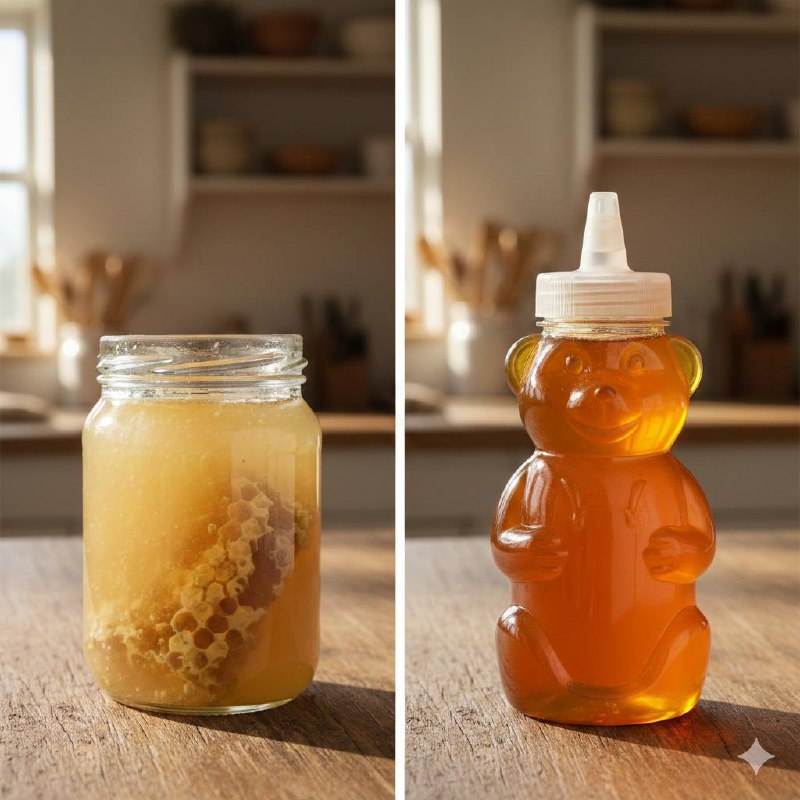
Walk into any supermarket and you’ll find shelves of golden honey. Clear, runny, consistent — and nothing like the honey that comes from a beehive.
The truth is, most commercial honey has been so heavily processed that it’s barely recognisable as the superfood nature intended. At Bramble Farm Bees, we’re often asked: What’s the difference between raw honey and processed honey? and Is raw honey actually better for you?
The short answer: yes. The long answer? Keep reading.
What Is Raw Honey?
Raw honey is honey exactly as it exists in the beehive. It hasn’t been heated above natural hive temperatures (around 35°C), and it hasn’t been heavily filtered. It contains:
- Pollen — trace amounts from the flowers the bees visited
- Propolis — the bees’ natural antibiotic resin
- Royal jelly — nutrient-rich secretion from worker bees
- Bee pollen — protein-packed flower pollen collected by bees
- Enzymes — over 22 different enzymes including diastase, invertase, and glucose oxidase
- Vitamins & minerals — B vitamins, vitamin C, calcium, iron, magnesium, and more
- Antioxidants — polyphenols and flavonoids that fight free radicals
Raw honey may be cloudy, crystallise over time, and vary in taste and colour from batch to batch. That’s not a flaw — that’s proof it’s real.
What Is Processed (Regular) Honey?
Processed honey (sometimes called commercial, regular, or pasteurised honey) has typically undergone:
1. Pasteurisation
Heated to 70°C or higher, then rapidly cooled. This kills yeast cells that could cause fermentation, but it also:
- Destroys beneficial enzymes (including glucose oxidase, which produces hydrogen peroxide)
- Reduces antioxidant content by up to 30%
- Eliminates vitamins and minerals
- Kills beneficial bacteria
The result? Honey that never crystallises and stays liquid on shelves for years. But also honey that’s essentially sugar syrup with none of the health benefits.
2. Ultrafiltration
Passed through fine filters under high pressure. This removes:
- Pollen grains (which contain protein and help with allergies)
- Propolis particles
- Air bubbles
- Everything that makes honey beneficial
Ultrafiltration exists primarily because pollen acts as a fingerprint. Without it, you can’t trace where honey came from — which is convenient if you’re importing cheap honey and calling it local.
3. Blending
Most supermarket honey is blended from multiple sources — often multiple countries. That consistent taste? It’s manufactured, not natural.
The Health Benefits: Raw vs Processed
| Benefit | Raw Honey | Processed Honey |
|---|---|---|
| Enzymes | 22+ types preserved | Destroyed by heat |
| Antioxidants | High levels | Reduced by 30%+ |
| Pollen content | Present | Removed |
| Vitamins | B vitamins, C, minerals | Minimal to none |
| Wound healing | Effective (antibacterial) | Minimal effect |
| Allergy relief | May help (local pollen) | No benefit |
| Digestive health | Prebiotic benefits | None |
| Shelf life | Indefinite | Indefinite |
Raw Honey’s Unique Benefits
1. Natural Antibacterial Properties
Raw honey contains hydrogen peroxide (produced by the enzyme glucose oxidase), low pH, and high sugar content — all of which inhibit bacterial growth.
2. Local Allergy Relief
There’s evidence that consuming raw local honey may help with seasonal allergies. The theory: small amounts of local pollen act like a natural vaccine.
3. Digestive Health
Raw honey contains prebiotics that feed beneficial gut bacteria.
4. Sore Throat & Cough Relief
Raw honey is as effective as over-the-counter cough medicines for soothing sore throats.
How to Spot Real Raw Honey
Look for:
- Crystallisation — raw honey crystallises over time
- Cloudiness — may contain tiny particles of pollen, wax, and propolis
- Variation — real raw honey varies by season and batch
- Label says raw — obvious, but necessary
- Local source — imported honey won’t be raw
Be wary of:
- “,”:”pure honey” — means nothing legally
- “Natural honey” — equally meaningless
- Honey that never crystallises
- Very cheap honey
Why Raw Honey Costs More
Real talk: raw honey is more expensive than supermarket honey. Here’s why:
- We don’t over-harvest — we leave enough honey for the bees
- No shortcuts — no heating, no filtering, no blending
- Labour intensive — small batch extraction, careful handling
- Seasonal variation — if it’s a bad summer, yields are lower
- Local provenance — you’re paying for transparency
Our Promise
When you buy our raw Kent wildflower honey, you’re getting:
✓ Truly raw — never heated above hive temperature
✓ Strained, not filtered — pollen and propolis intact
✓ Single-origin — from our hives in Kent
✓ Seasonal — taste changes with the flowers
✓ Sustainable — we put the bees first
Ready to Taste the Difference?
Join our Honey Club for regular deliveries of seasonal raw honey throughout the year.
Or browse our full range of raw honey, beeswax candles, and propolis products in our shop.
Questions about raw honey? Drop us a message — we’re always happy to chat.
Luke and the Bramble Farm Bees team
Leave a Reply